
The Designer's Job Is Changing
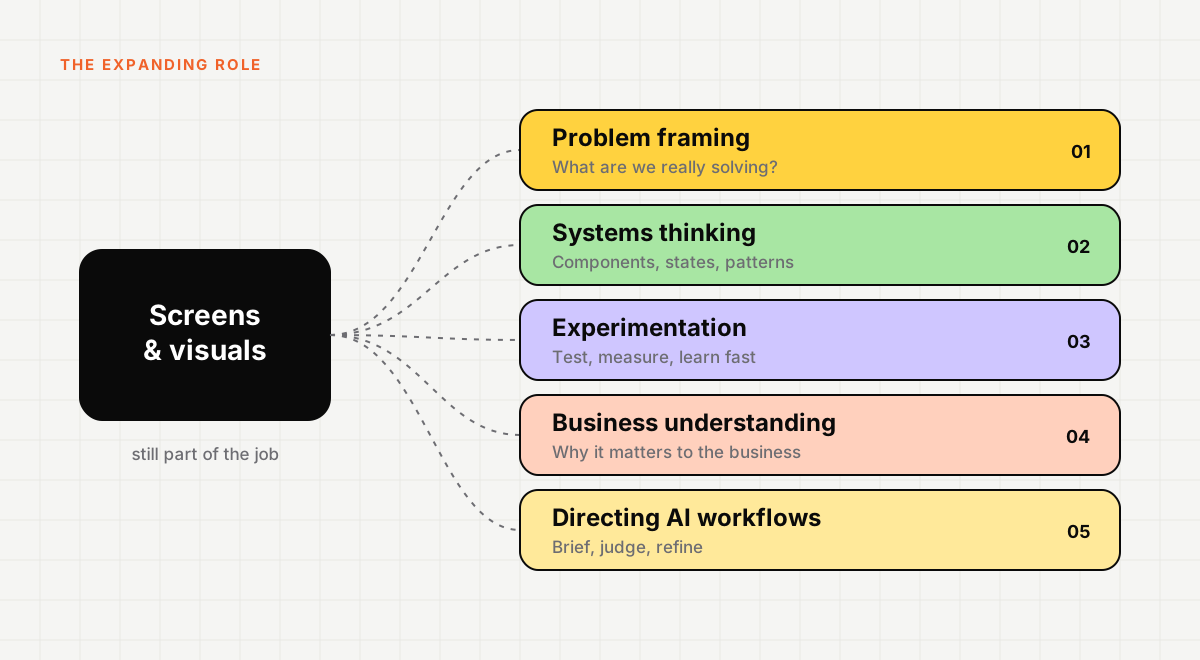
Designers are moving from making screens and visuals toward framing problems, thinking in systems, running experiments, understanding the business and directing AI-assisted work.
For a long time, a designer's value was easy to point at: the screens, the logos, the layouts, the visuals. You could open a file and see the work.
That's still part of the job. But it's becoming the smaller part. As tools — especially AI tools — make it faster to produce visuals, the value of a designer is shifting toward the decisions that happen before and around the pixels.
From making screens to framing problems
The most valuable design work often happens before anything is drawn. What problem are we actually solving? For whom? How will we know if it worked?
A designer who can take a vague request — "we need a new dashboard" — and turn it into a clear problem — "account managers can't see which clients need attention this week" — is doing work no tool can do for them. Good framing makes every later decision easier.
From individual screens to systems
Products are no longer a set of pages. They're systems: components, patterns, states, content rules and behaviours that need to stay consistent across platforms and teams.
Designers increasingly think in terms of:
- design systems that scale across products
- states and edge cases, not just the happy path
- content and data, not just layout
- how parts connect, not just how each part looks
Systems thinking is what makes design sustainable once a product grows beyond a single team.
From final answers to experiments
Instead of designing the one "right" solution, more designers now design tests: small, fast experiments that answer a specific question.
That means comfort with prototypes that are deliberately unfinished, with measuring outcomes, and with being wrong quickly. The goal isn't a perfect design on the first try. It's learning what works before investing in building it properly.
The designer's job is less about having the answer and more about finding it quickly.
From visual quality to business understanding
Good design has always cared about users. Increasingly, it also needs to speak the language of the business: revenue, retention, cost, conversion, risk.
This isn't about designers becoming business analysts. It's about understanding why a project exists, what success looks like to the people funding it, and how design decisions affect those outcomes. Designers who can connect their work to business results get a seat in the conversations where decisions are made.
From doing everything by hand to directing AI
AI can now generate layouts, images, copy, code and prototypes. That doesn't remove the designer — it changes what they spend their time on.
Directing AI-assisted work well requires:
- clear briefs — AI output is only as good as the direction it's given
- strong judgement — knowing which of many options is actually right
- craft — spotting and fixing what generated work gets wrong
- responsibility — owning the result, including accessibility, accuracy and brand consistency
In a sense, every designer is becoming a bit of a creative director.
What doesn't change
With all this change, some things stay exactly the same. Curiosity about people. Care for detail. The ability to make something complicated feel simple. Taste. These have always been the heart of design, and they matter more — not less — when the production part gets faster.
The takeaway
The designer's job isn't disappearing. It's moving up the process: from producing outputs to shaping decisions. Designers who embrace problem framing, systems thinking, experimentation, business understanding and AI direction won't be replaced by tools. They'll be the ones deciding how those tools are used.